
Trading discipline isn't about eliminating emotion or following rules blindly. Learn 8 practical habits that can help traders build a more consistent decision-making process.
A trader can have a strategy, understand risk management and recognise a good setup — and still struggle to trade consistently.
Why?
Because knowing what to do and actually doing it when money is at risk are two different things.
Trading discipline sits between the two.
It is what helps a trader wait when there is no setup, follow a plan when emotions rise, accept a loss without immediately reacting to it, and execute consistently even when the outcome of the previous trade is still fresh.
But discipline isn't something a trader either has or doesn't have.
It can be built.
What is trading discipline?
Trading discipline is the ability to consistently follow a defined trading process even when emotions, recent results or market movements create pressure to do something different.
That can mean:
- waiting for confirmation instead of entering early
- respecting predetermined risk
- accepting a stop rather than moving it
- avoiding trades that don't meet your criteria
- stopping when your trading rules tell you to stop
- reviewing decisions honestly after the session
Discipline doesn't guarantee profitable trades.
It helps ensure that your decisions remain connected to your process rather than being driven primarily by impulse.
Why is trading discipline so difficult?
Trading creates an unusual environment.
Every decision can produce an immediate financial reward or consequence.
A winning trade can create confidence.
Several wins can create overconfidence.
A loss can create frustration.
A missed opportunity can create FOMO.
A large move can create urgency.
And all of those emotions can influence the very next decision.
This is why simply telling yourself to "be disciplined" rarely works.
A more effective approach is to build structures and habits that make disciplined behaviour easier to repeat.
8 habits that can help build trading discipline
Trading discipline is usually built through small behaviours repeated consistently rather than one dramatic change.
Here are eight practical habits.
1. Define what a valid trade looks like before the market moves
If your criteria only become clear once price starts moving quickly, emotion has too much room to influence the decision.
Before trading, define the conditions that make a setup valid.
Depending on your strategy, that might include:
- market structure
- entry conditions
- confirmation
- invalidation level
- risk
- position size
- market conditions
- situations in which you will not trade
The clearer the criteria are beforehand, the easier it becomes to distinguish a planned opportunity from an impulsive one.
2. Use a pre-trade checklist
Pilots use checklists even after thousands of hours of experience.
Not because they don't know what to do.
Because consistency matters.
Trading can benefit from the same principle.
Before entering a trade, ask:
- Is my setup present?
- Is the entry valid?
- Have I defined my risk?
- Is my position size appropriate?
- Do I know where the trade becomes invalid?
- Am I entering because of my plan or because price is moving?
- Am I mentally ready to take this trade?
The objective isn't to create bureaucracy around every entry.
It is to create a short pause between seeing an opportunity and acting on it.
3. Define your risk before entering
Risk decisions become harder once a trade is live.
Before entering, know:
- how much you are prepared to lose
- where the trade is invalidated
- what position size is appropriate
- whether the potential trade fits your risk rules
Once the position is open, avoid changing those parameters simply because the trade becomes uncomfortable.
Discipline is easier when important decisions are made before emotional pressure increases.
4. Stop judging discipline by P&L alone
This is one of the most important distinctions a trader can make.
A profitable trade is not automatically a disciplined trade.
A losing trade is not automatically an undisciplined trade.
You could ignore your setup, take excessive risk and make money.
The outcome was positive.
The process was poor.
You could also follow your setup exactly, respect your risk and take a legitimate stop.
The outcome was negative.
The process may have been excellent.
If P&L becomes the only measure of whether a decision was good, poor behaviour can accidentally get rewarded.
Evaluate both:
- Outcome
- Execution
Over a meaningful sample of trades, process becomes far more useful than judging yourself by one result.
5. Create rules for what happens after a loss
Many discipline problems don't start with the first trade.
They start with the reaction to it.
After a loss, traders may:
- enter again too quickly
- increase position size
- lower their setup standards
- chase a market move
- take additional risk to recover the loss
Define your response before this happens.
For example:
Loss
→ Pause
→ Record the trade
→ Check your emotional state
→ Reassess the next setup independently
→ Only trade again if your normal criteria are met
This creates a circuit breaker between a financial outcome and the next decision.
6. Know when not to trade
Discipline isn't demonstrated only by the trades you take.
Sometimes it is demonstrated by the trades you don't take.
There may be days when:
- your setup isn't present
- market conditions don't suit your strategy
- volatility is unusual
- you're distracted
- you're tired
- you're frustrated
- you've already reached your trading limit
Doing nothing can feel uncomfortable because trading platforms make action incredibly easy.
But choosing not to trade when your conditions aren't met is still a trading decision.
7. Review rule adherence, not just results
At the end of a session, don't only ask:
"How much did I make or lose?"
Ask:
- Did I follow my setup?
- Did I respect my risk?
- Did I enter where I intended?
- Did I follow my stop?
- Did emotion influence an entry?
- Did I take a trade outside my plan?
- Did I follow my maximum-trade or loss rules?
- What behaviour should I repeat tomorrow?
- What behaviour should I avoid?
This turns journaling from a record of trades into a feedback system.
Over time, you begin seeing patterns between behaviour, execution and outcomes.
8. Measure consistency over multiple trades
One disciplined day doesn't create a disciplined trader.
Neither does one bad day erase months of good habits.
Look for patterns across a meaningful sample of trades.
For example:
How often did you follow your entry criteria?
How often did you respect your risk?
How frequently did you break a trading rule?
Were rule breaks more common after losses?
Did your execution change when you were tired, frustrated or overconfident?
The objective is not perfection.
The objective is awareness followed by gradual improvement.
Discipline is a system, not a personality trait
It is easy to describe an undisciplined trade as a failure of willpower.
But willpower is unreliable.
Systems are more useful.
A trader can create structure around the moments where discipline is most likely to break:
Before the trade
→ Check readiness and setup
During the trade
→ Follow predetermined risk and execution rules
After the trade
→ Record what actually happened
After the session
→ Review behaviour and identify patterns
This creates a repeatable cycle rather than relying on motivation in the heat of the moment.
The market doesn't know what happened on your previous trade
Your previous win does not make the next setup stronger.
Your previous loss does not make the market owe you a recovery.
Every new trade should earn its place independently.
That is one of the foundations of trading discipline.
The objective isn't to trade without emotion.
It is to build enough structure around your decisions that emotion doesn't automatically determine what you do next.
Trading discipline is not built in one perfect session.
It is built one decision at a time.
Related Resources
Loss Aversion Trading Traps: Why Holding Losers Feels Safer
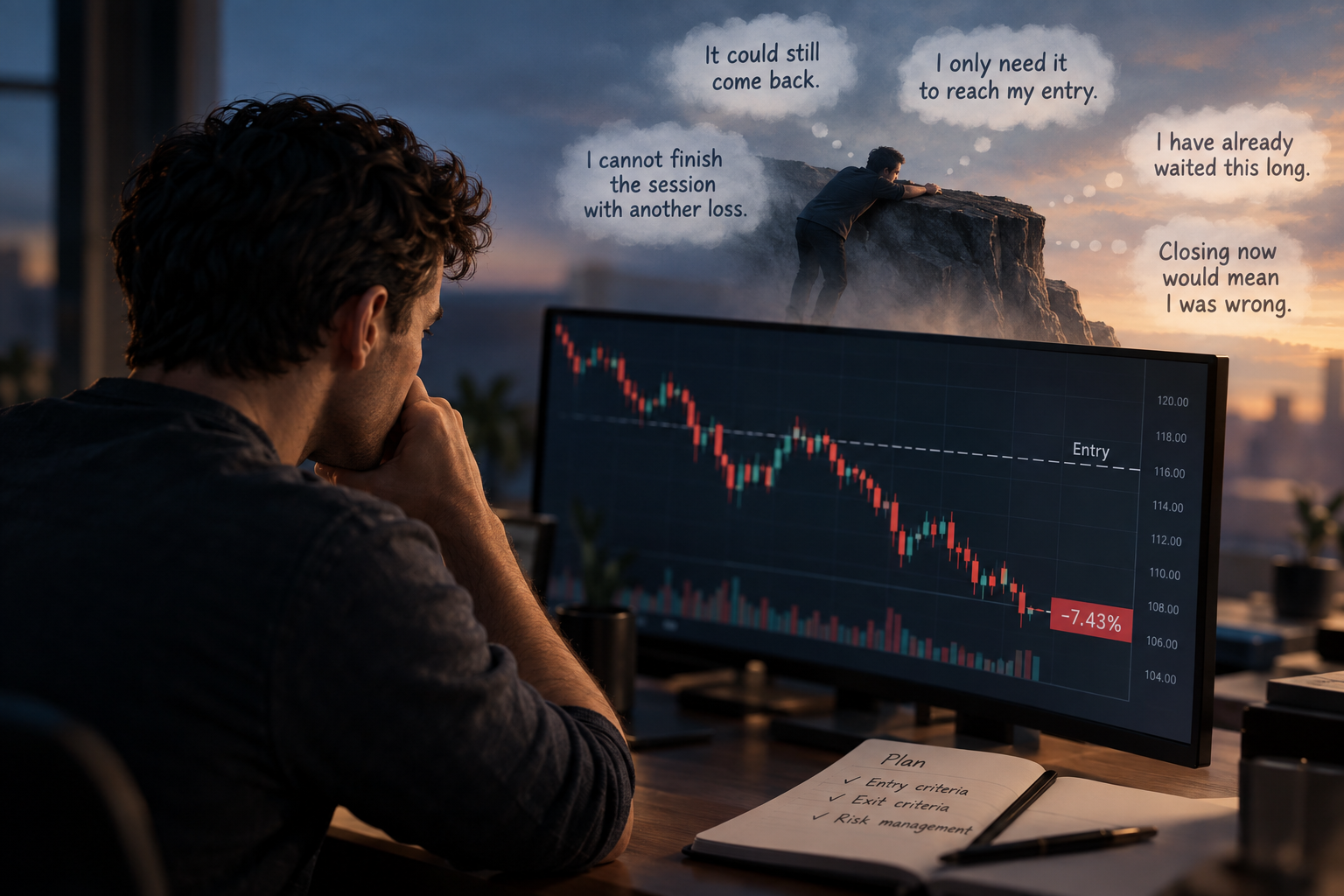
Holding a losing trade can preserve hope while postponing the discomfort of accepting a loss. Learn how to recognise that emotional bargain and keep your decision-making anchored to a process.

How to Improve Trading Psychology: A Practical Guide for Traders
Most trading losses are not caused by a bad strategy — they are caused by what happens between the strategy and the click. This practical guide shows you how to improve your trading psychology with concrete exercises for emotional control, discipline, patience, and self-awareness.
How to Stop Revenge Trading: A Practical Guide for Traders
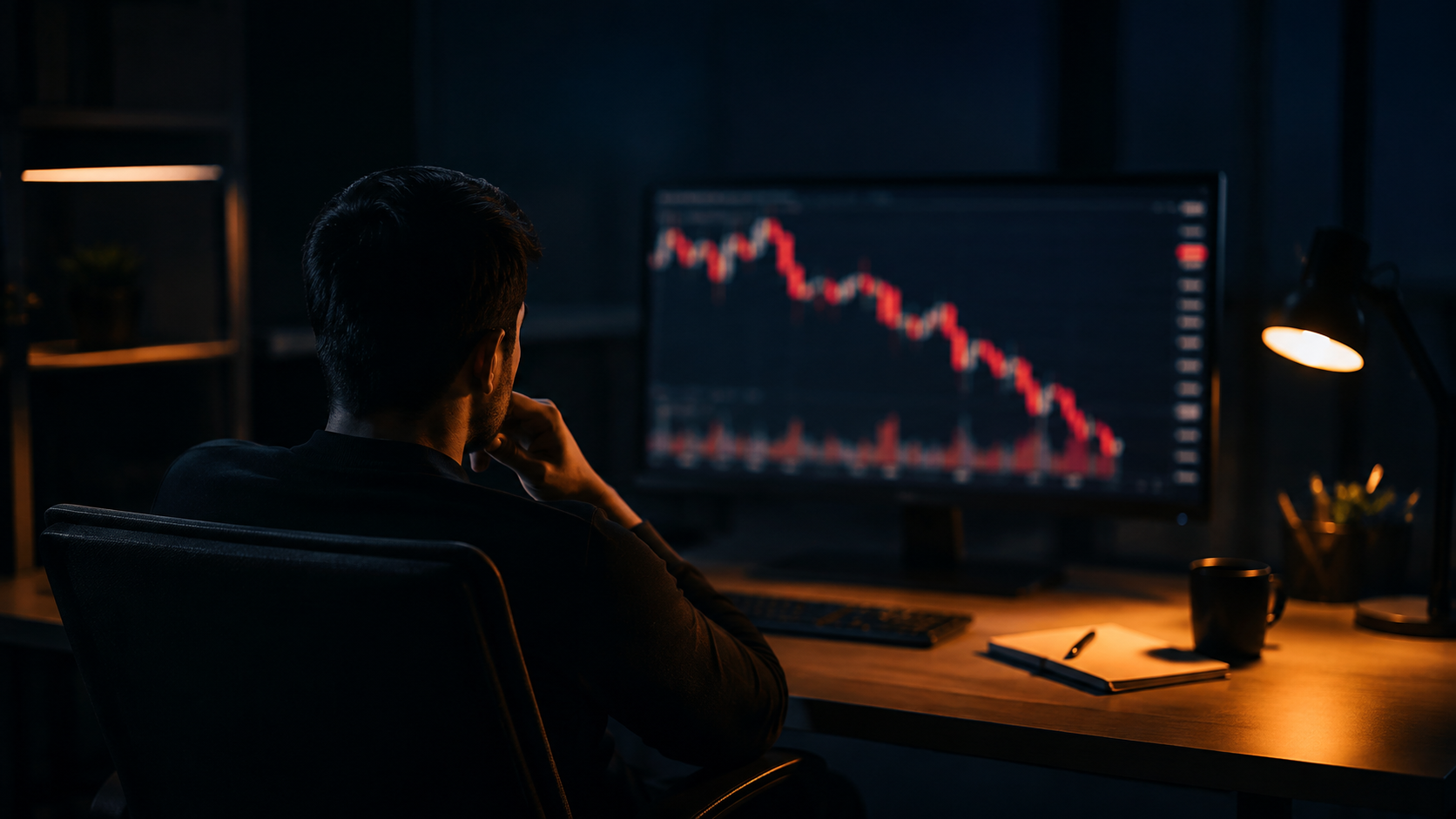
Revenge trading can turn one manageable loss into a damaging trading session. Learn how to recognise the warning signs, interrupt the cycle and build a more disciplined response to losing trades.